Robots Outpace Human Athletes to Make History at Beijing Half-Marathon: A New Era of Competitive Racing?
Unprecedented Automation in Sports: The Beijing Phenomenon
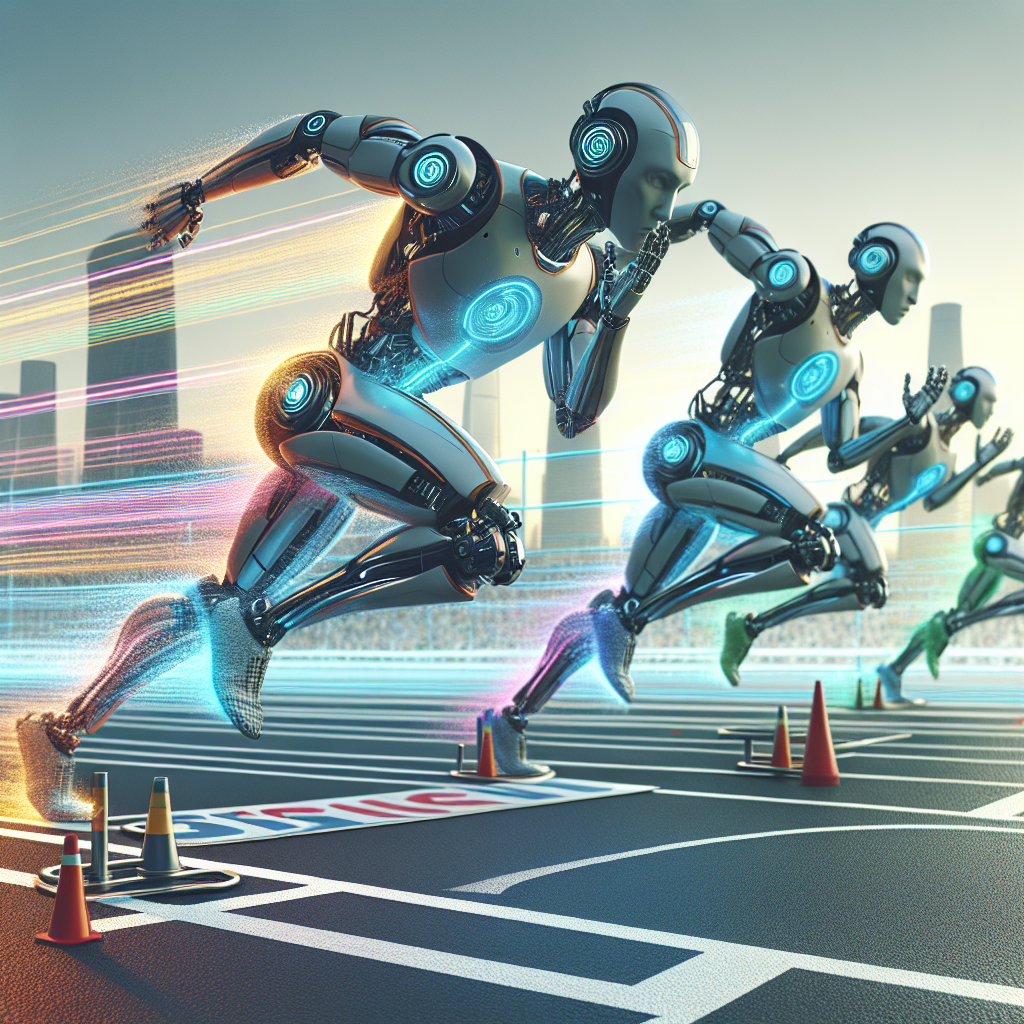
In a landmark event for both technology and sports, robotic runners recently outpaced their human counterparts at the Beijing Half-Marathon, raising questions about the role of automation in competitive environments. While futuristic portrayals of robotics often focus on manufacturing or healthcare, this development positions robots in an unexpected arena: the world of athletics. The implications of this achievement stretch beyond the realm of sports, intertwining with global economic trends, labor disputes, and technological advancements. These machines, the epitome of cutting-edge engineering, managed to complete the 21.1-kilometer run faster than top human athletes, showcasing a significant leap in robotic capability.
Aligning with Macroeconomic Trends: Labor and Automation
This event aligns with ongoing macroeconomic shifts, particularly the increasing reliance on automation across various sectors. Industries are continually pushing for more efficiency, often resulting in the displacement of certain job functions. The robotics achievement in Beijing echoes the broader narrative of how machines are progressively pushing the boundaries of human capabilities. As economies seek efficiency during times of economic uncertainty—such as the one shadowing global markets today—automation appears as both a promise and a challenge.
The introduction of robotic athletes also bears relevance to the ongoing SAG-AFTRA and WGA strikes in Hollywood, which reflect broader labor apprehensions regarding the encroachment of artificial intelligence in traditionally human-dominated tasks. The sports world might now face similar ethical and operational dilemmas. Will robots endear themselves to fans as reliable sources of excitement and unpredictability? Or will they generate resistance, seen as intruders in a uniquely human domain?
Technological Limitations and Achievements: A Double-Edged Sword
The success of these robots incorporates a range of technologies—from advanced machine learning algorithms to state-of-the-art sensor technology—that enabled them to navigate a challenging marathon course efficiently. However, the race also highlighted limitations that continue to plague robotic automation. For instance, while the robots exhibited remarkable physical endurance and pacing, their ability to adapt to unpredictable obstacles or dynamically changing conditions remains constrained compared to human athletes, who can intuitively adjust to unforeseen challenges.
Moreover, the requirement for high-level, ongoing technical maintenance and energy input poses questions about scalability and environmental considerations. While human athletes contribute to a zero-emissions sporting event, the energy costs associated with charging and maintaining robotic runners could pose an environmental concern, especially if scaled for larger, more prolonged sporting events.
Financial Implications: The Market for Robotic Sports
The emergence of robots as runners brings with it potential market opportunities and financial considerations. Companies within the AI and robotics sectors may find new avenues for growth, with technology firms eyeing competitive sports as a new frontier. Venture capital may soon flow into startups and established companies working to perfect robotic athletics, sparking a shadow race among tech giants to capture this burgeoning market.
The economic implications are significant. Could robotic sports attract a new fan base, curious to see technological prowess on display? If so, this might lead to new revenue streams through sponsorships, broadcasting rights, and betting markets. On the flip side, there is the risk that the traditionalist sports audience may not embrace such changes, potentially limiting the commercial viability of robotic athletics.
Societal Reactions: Enthusiasm Meets Skepticism
The public reaction to the robots’ performance at the Beijing Half-Marathon has been mixed, highlighting issues of authenticity and the essence of sportsmanship. Enthusiasts argue that these developments represent the pinnacle of human ingenuity, pushing the boundaries of what’s possible. However, detractors question the integrity of involving machines in an arena that has long celebrated human spirit and endeavor.
From a societal standpoint, the inclusion of robots in competitive sports is representative of a growing tension between embracing technological change and preserving cultural traditions. Similar to reactions faced with the rise of eSports, there’s an ongoing debate over what constitutes “legitimate” competition and the value of human elements such as perseverance, determination, and emotional investment—qualities that robotic contenders currently lack.
Regulatory and Ethical Challenges Ahead
The unexpected presence of robots in competitive sports introduces new regulatory and ethical challenges. Sports organizations, traditionally not focused on automation or AI, may soon find themselves grappling with policies that ensure fair competition between human and mechanical participants. The potential introduction of robot-specific events within established competitions could provide a compromise, though this raises questions about allocation of resources and viewership appeal.
Moreover, preventing any form of technological doping—where enhancements are made to give unfair advantages—will require stringent oversight. The ethical considerations also extend to labor rights, as the very concept of what it means to be an athlete may need redefinition to accommodate both human and non-human participants.
Long-term Outlook: Navigating an Uncertain Future
As the dust settles on the Beijing Half-Marathon, the conversation pivots to the long-term implications of robotic involvement in sports. As societies continue to grapple with reconciling technological advancement with existing societal norms, the global community will need to engage in discussions about the future of sports and the place of robotics within it. This will involve stakeholders from engineers and ethicists to athletes and regulators, creating a dialogue around the values we prioritize in competitive environments.
Ultimately, the introduction of robots in events like the Beijing Half-Marathon signals a broader shift in how technology is poised to reshape not just industries but cultural institutions as well. Whether embraced or resisted, robotic athletes are here to stay, and their impact will be felt across the socio-economic spectrum, heralding a transformative period in both technology and sports.
답글 남기기