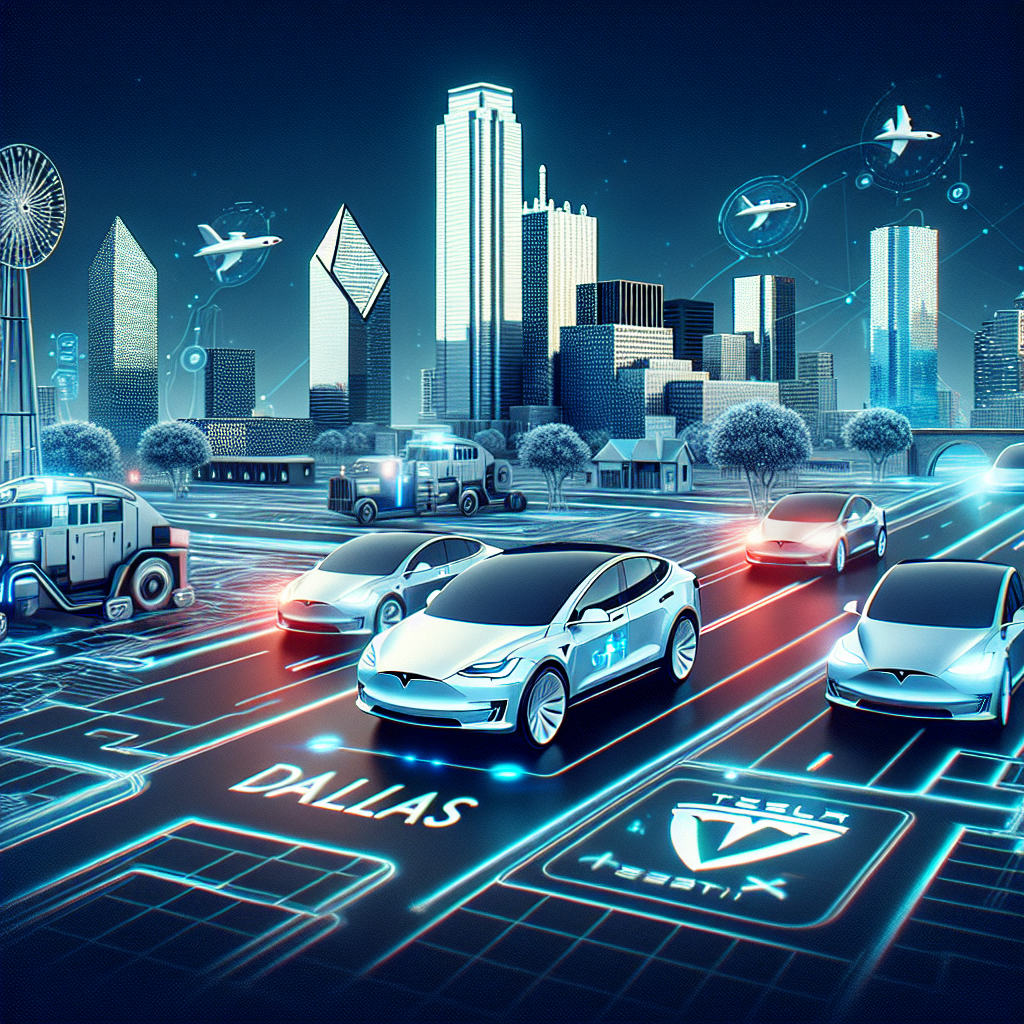
Tesla’s Ambitious Robotaxi Rollout Faces Real-World Challenges in Dallas and Houston
Autonomous Ambitions Meet Urban Realities
Tesla’s latest push to expand its robotaxi service into the bustling metropolises of Dallas and Houston highlights both the promise and pitfalls of autonomous vehicle technology in urban environments. As these Texan cities become the latest testing grounds, stakeholders from local governments to tech enthusiasts are watching with mixed emotions. The Bay Area success needs to navigate the uncharted territories of Southern hospitality, complex infrastructure, and legislative hurdles.
Macroeconomic Context: A Double Down on Disruption
With the global economy facing headwinds such as inflation and post-pandemic recovery slowdowns, Tesla’s expansion is reminiscent of a strategic bet against economic anxieties. Elon Musk’s entrepreneurial audacity could be seen either as a visionary gamble or a precarious risk in today’s economic climate. As consumers remain wary of spending amid economic uncertainties, will there be significant uptake for a service that challenges conventional modes and perceptions of urban mobility?
Supply Chain and Technological Constraints
The rollout comes at a time when technology-driven industries are grappling with supply chain challenges. Semiconductor shortages continue to plague automotive and technology sectors alike, threatening the timelines of many companies relying on chip-heavy products. Tesla claims to have secured necessary materials, but skeptics note that any delays could disrupt the anticipated service launches. Moreover, the development of advanced AI systems faces not just hardware bottlenecks, but also software hurdles—particularly in creating AI that can safely navigate dense urban traffic.
Industry-Specific Realities: Tesla vs. Traditional Transport
Building a business case for robotaxis in Dallas and Houston necessitates comparing the far-reaching impacts on traditional transport services. Texas is known for its car-dependent infrastructure, with a deeply entrenched reliance on private vehicles, ride-sharing, and public transport. Tesla’s autonomous fleet must offer convulsive benefits over these entrenched systems if it hopes to capture significant market share.
For years, ride-sharing behemoths like Uber and Lyft have struggled with profitability despite dominating cityscapes worldwide. Their ongoing issues, from gig worker controversies to pricing pressures, offer a mixed precedent for Tesla. Delving into the potential labor disputes, analogies can be drawn with gig economy challenges—albeit without the human drivers. Yet Tesla’s reliance on autonomous tech means any breakthroughs or setbacks will reverberate across the transport industry.
Consumer Perceptions: Trusting Robotaxis
Consumer acceptance will be a critical battleground. Trust in autonomous vehicles has fluctuated with each high-profile incident, and many Texans might be skeptical about relinquishing control to machines. The psychological comfort of riding in human-driven vehicles still dominates, and diverse focus groups showcase an array of apprehensions from mechanical reliability to hacker vulnerability. Cybersecurity concerns remain particularly acute, with some potential passengers fearing potential breaches and malicious controls over autonomous cars.
Legislative and Regulatory Hurdles
The legislative environment in Texas presents both opportunities and obstacles for Tesla’s ambitions. While the state is generally pro-business with lax regulations compared to its counterpart states, significant scrutiny will inevitably arise as robotaxis potentially commandeer city streets. Local governments are tasked with ensuring public safety, and the balance between encouraging innovation and mitigating risks will be pivotal. Policymakers must strike the right balance, creating an ecosystem that allows autonomous vehicle service expansion without compromising citizen safety.
Labor Implications Amidst Rising Unemployment
While autonomous vehicles promise to streamline operations and cut costs, they pose significant questions about future labor dynamics. With the potential replacement of drivers, concerns about job displacement are valid, particularly amidst the economic uncertainties currently influencing job markets. Industries tied to traditional transportation and logistics may see shifts in labor demands, though new opportunities in tech and service maintenance might emerge as counterweights.
Hardware and Software Synergy Challenges
Tesla must ensure a seamless synergy between advanced hardware and AI software to guarantee safety and performance. The real-world challenges faced by autonomous vehicles, such as unpredictable human behaviors and complex urban landscapes, require not just powerful GPUs and redundant systems but also sophisticated algorithms capable of real-time learning and decision-making. Recent across-the-board improvements in deep learning capabilities could result in better emergency handling this time around, offsetting prior issues faced elsewhere.
A Competitive Yet Undetermined Marketplace
The burgeoning robotaxi market looks intensely competitive. Tesla goes head-to-head with rivals such as Waymo and Cruise, both showing significant interest in similar urban territories. With auto giants and tech firms vying to secure a slice of the automated-mobility pie, these market forces lead to an aggressive innovation race that could shape transportation’s future landscape.
Impact of External Labor Movements
Amidst Tesla’s ambitions, broader labor movements like the SAG-AFTRA and WGA strikes serve as timely reminders of workforce mobilization power. Autonomous vehicles sit at the intersection of labor, technology, and consumer preference, shadowed by broader labor shifts inevitable when discussing AI and autonomous evolution. Any misalignment in Tesla’s approaches amid these sensitive movements could escalate public relations challenges.
The Road Ahead: Progress with Caution and Oversight
As Tesla continues navigating these uncharted waters in Dallas and Houston, the stakes grow ever higher. Success will largely depend on the adeptness with which Tesla addresses these technological, legislative, and consumer engagement challenges. Only time will reveal whether Tesla’s vision for robotaxis becomes a milestone in urban transport innovation or another half-realized ambition in the storied landscape of autonomous technology.
답글 남기기